
Therapy Groups for Therapists: Find Professional Support
Article Summary: Therapy groups for therapists are critical for preventing burnout, connecting with other pros, and continuing your professional development. Retreats and peer consultation groups for therapists can provide the connections, resources, and focus you need to continue developing into the best version of yourself. Read the rest of our blog to learn more!
As therapists, we all know the power of therapy. Therapy for therapists is an invaluable form of self-care that can boost the quality of your work and client outcomes—all while reducing the risk of therapist burnout.
With that in mind, therapy groups for therapists can be equally powerful. By meeting with a peer consultation group for therapists, you can connect with passionate, like-minded professionals who aim to deliver high-quality care to their clients.
As we’ll explain today, one of our favorite methods of unlocking therapy group sessions is through therapist retreats.
Continue reading to learn more!
Table of Contents
Benefits of Therapy Groups for Therapists
Retreats As Therapy Groups for Therapists
Book A Therapist Retreat
Benefits of Therapy Groups for Therapists
Attending therapy groups for therapists can generate a variety of benefits that are ideal for your own self-care and professional development. A few examples:
1. Build Community
As therapists, we often sit through full days and weeks of one-on-one sessions, taking on the biggest challenges of others without input from other professionals.
It’s exhausting.
A group therapy session specifically for therapists gives you an opportunity to realize you’re not alone—and to connect with a community of people who are experiencing the same challenges.
Together, you can:
- Develop new skills to cope with stress
- Share stories and struggles
- Build common goals
- Find new support and insights
Group therapy sessions provide an important reminder: You’re not alone. If you’re a therapist dedicated to providing high-quality support to clients, a group session can help you stay in shape by building a larger community around yourself.
2. Fight Burnout
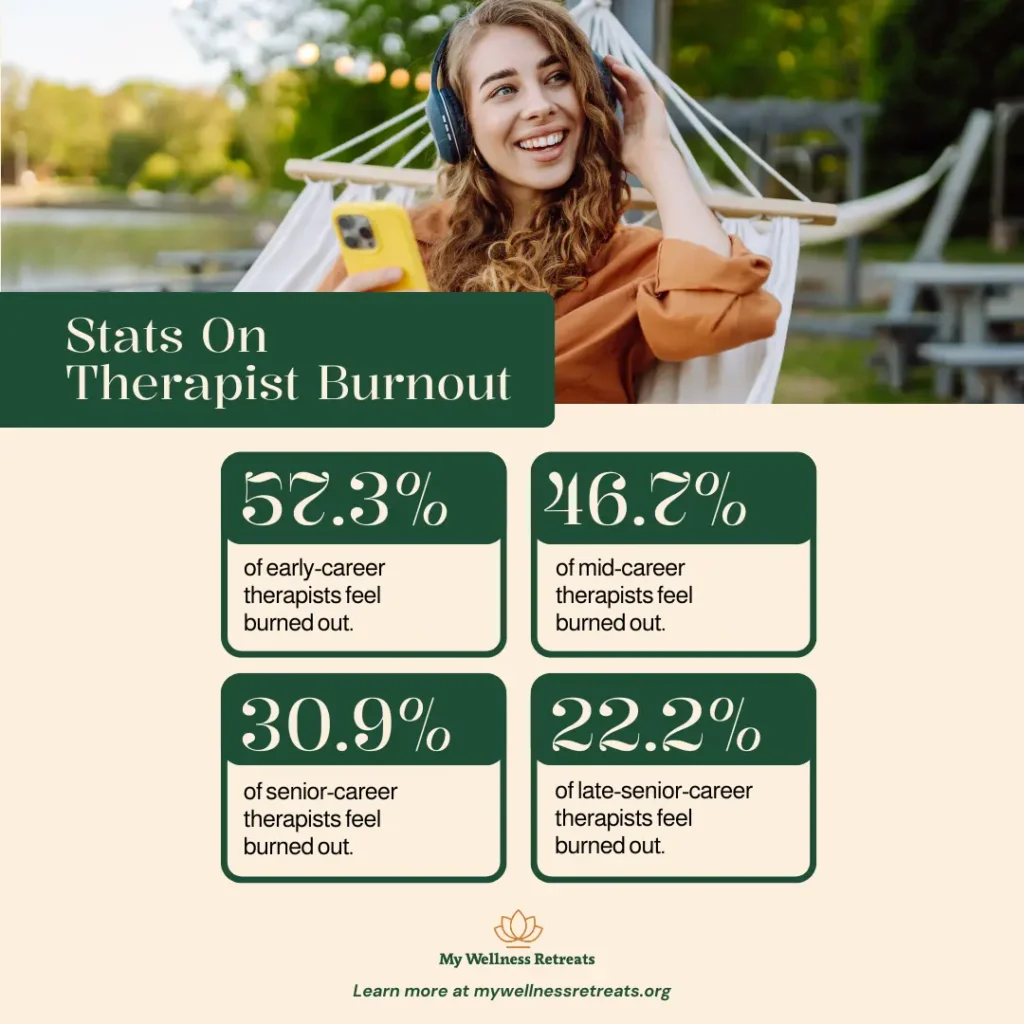
The sad reality of our profession is it’s exhausting. And the earlier you are in your career, the more likely you are to experience full-blown burnout, according to the American Psychological Association.
According to their research:
- Early Career Therapists: 57.3% feel burned out
- Mid-Career Therapists: 46.7% feel burned out
- Senior Career Therapists: 30.9% feel burned out
- Late Senior Career Therapists: 22.2% feel burned out
While that’s alarming, we also know another reality: Therapy can prevent burnout. In fact, multiple studies have shown that cognitive behavioral therapy is consistently effective at managing, eliminating, and preventing burnout.
Even better: Additional research shows group CBT can be equally impactful—which means group therapy for therapists can be a powerful antidote for professional burnout.
3. Peer Feedback
These group therapy sessions also serve as peer consultation groups for therapists. Essentially, you can use these as an opportunity to gain additional perspective on:
- Your unique client challenges
- Your style of treating clients
- Your approach to different treatments
This sort of real-time feedback from your peers offers immediate growth opportunities—similar to booking ongoing training for professional CEUs.
Retreats As Therapy Groups for Therapists
Our therapist retreats have been praised for their restorative power, allowing busy, burned-out therapists to relax in a calm environment surrounded by good people, healthy meals, and natural environments.
As My Wellness Center Associate Counselor and My Wellness Retreats instructor Kelly O’Connell says, “If you want to do something good for yourself, [attending a My Wellness retreat] will bring you back to you.”
Benefits of Using Retreats For Therapy Groups
Retreats are an excellent resource for self-growth, self-exploration, and therapy. A few of the biggest benefits:
1. Opportunity to Recharge
Many therapist retreats—including those at My Wellness Retreats—are hosted in fun or exotic locations—places you might only visit once in a lifetime.
In Costa Rica, for example, our retreat attendees were surrounded by fresh air and were served healthy, nutritious meals while connecting with like-minded professionals.
The entire trip was an opportunity to step away from the computer, phone, and sessions to finally focus on self-care.
See a small example in this Facebook post:
2. Build Community
As we mentioned earlier, group therapy for therapists is an excellent strategy for building community.
Therapist retreats take this to another level. On a retreat, you connect with therapists who are actively engaged in their own development.
They believe so strongly in growth, they’re willing to step away from their practice and leave home for multiple days—all in the interest of resetting and setting themselves up for long-term success.
By attending a therapist retreat, you automatically surround yourself with people who are willing to go to great lengths to become the best versions of themselves—and they want to connect with you.
3. Develop New Skills
Of course, one of the best features of a therapist retreat is the opportunity to earn CEUs—but the value goes far beyond simply checking a box for licensure requirements.
At a retreat, learning becomes immersive. You’re not just passively sitting through a lecture—you’re actively engaging with new frameworks, techniques, and perspectives in a setting designed to help you absorb and apply them. Without the usual pressures of your day-to-day schedule, you have the mental space to fully focus on your professional growth.
You might deepen your understanding of specific modalities, like trauma-informed care, somatic practices, or cognitive behavioral techniques. You may also gain exposure to new approaches you haven’t yet incorporated into your work—helping you expand your toolkit and better serve a wider range of clients.
Here’s how Raynetta Gibbs, LCSW, summarizes it: “I learned so much from these ladies… About trauma… About healing myself as well as others. Being in this environment really reinforced what it means to be in an environment to heal.”
Equally important is the opportunity to process what you’re learning in real time. Through discussions with peers, group exercises, and informal conversations, you can explore how these new skills fit into your unique style as a therapist.
Instead of rushing back to your next session, you have the time to reflect, integrate, and leave with practical tools you can immediately bring into your practice.
And, instead of being locked inside a poorly ventilated rented room, you’ll learn in an exotic location. In many cases, you’ll spend a morning or afternoon attending sessions—but the rest of the day is yours.
If you’re in Costa Rica, you can go ziplining or explore the jungle (as our attendees did). If you’re in Ireland, you can soak up the countryside and explore a historic country. If you’re in Panama, you can dip into the water and bathe in the sunlight.
4. Cut Out Distractions
In your everyday life as a therapist, distractions are constant. Between back-to-back sessions, administrative work, emails, and personal responsibilities, it can feel nearly impossible to carve out uninterrupted time for yourself—let alone for deep reflection or growth.
That’s what makes therapist retreats so powerful. They intentionally remove you from your normal environment, giving you the space to step away from the noise and focus on what truly matters.
Without the pressure to respond to emails or prepare for your next client, your mind has the opportunity to slow down. This mental clarity allows you to reconnect with your purpose, evaluate your current approach, and think more intentionally about your future—both personally and professionally.
Cutting out distractions also helps you be more present. Whether you’re participating in a group session, learning a new skill, or simply having a conversation with another therapist, you’re able to fully engage in the moment.
In a profession centered around presence, empathy, and attention, creating space for your own uninterrupted focus isn’t just helpful—it’s essential.
Book A Therapist Retreat
If you’re ready to take your career to the next level while building a like-minded community of compassionate therapists, look through our 2026 therapist retreats—or sort through our entire list of upcoming retreats.
We can’t wait to see you!